
The Culture Shock of 100-Level: What Brilliant Secondary School Graduates Should Genuinely Expect During Their First Semester
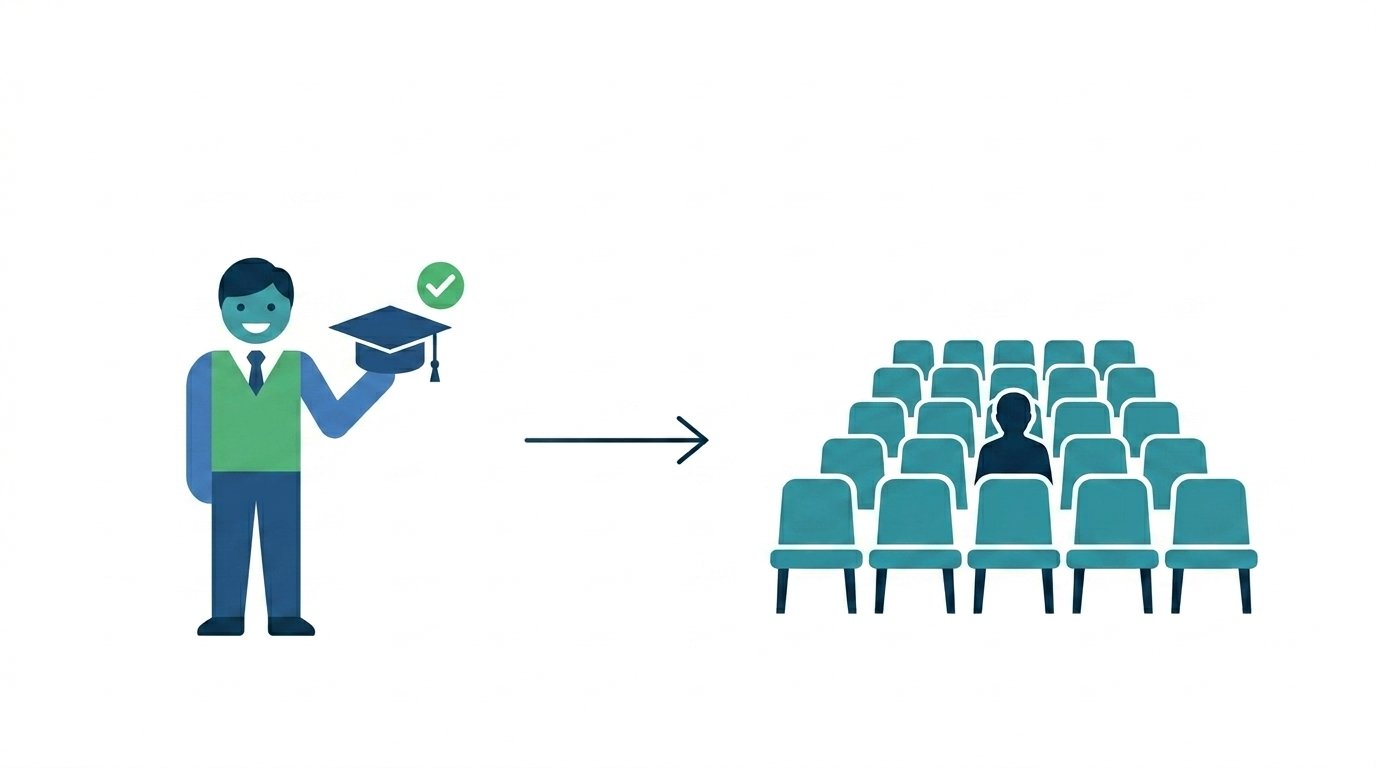
For the highest-achieving secondary school graduates, entering university feels like a victory lap. You finished at the top of your class, mastered your terminal school exams, and secured your hard-earned admission spot. You walk onto campus on Day One with a deeply ingrained identity: the brilliant student.
Then, within six weeks, the first set of university mid-semester tests or general 100-level continuous assessments hit, and a quiet, jarring reality sets in. The academic transition from secondary school to a major university campus is rarely just a step up in curriculum difficulty; it is a profound cultural and psychological shift.
Brilliant students don't struggle in their first year because they lack intelligence—they struggle because the hidden rules of academic survival have completely changed.
1. The Anonymity Shock: From Star Student to a Seat Number
In secondary school, your teachers knew your name, your family background, and your academic track record. If your grades slipped by 5%, a concerned teacher would pull you aside after class.
At university—especially in massive 100-level general courses or foundational science, math, and engineering halls—you are frequently one face among hundreds of students packed into a single lecture theater.
The Reality: The lecturer at the podium likely does not know your name, and your academic department will not track whether you sit in the front row or skip the lecture entirely.
The Fix: Transition instantly from passive supervision to radical personal autonomy. You are now the project manager of your own education.
2. The Grading Shock: Resetting Your "Baseline" Expectations
The most painful shock for brilliant freshmen is the grade reset. In secondary school, scoring 80% or 90% might have been your effortless baseline standard.
When you hit university, the grading ecosystem undergoes a massive structural calibration. In many institutions, a 70% is the absolute threshold for an A.
The Reality: You might study incredibly hard for your first 100-level mid-semester test and receive a 55% or 60%. For a student used to straight A's, this can trigger a spiral of imposter syndrome.
The Fix: Do not tie your self-worth to your secondary school transcript. A strong B or C on a difficult assessment is not failure; it is diagnostic data showing where your foundational gaps are before the final exam.
3. The Pace Shock: The "One-Month" Syllabus Acceleration
In secondary school, learning was slow and deliberate. At university, the velocity of information delivery will give you whiplash.
THE 100-LEVEL PACING VELOCITY
Secondary School:  [ Topic A ] ====> (3 Weeks of Drill & Review) ====> Quiz
University Level:  [ Day 1: Topic A ] -> [ Day 2: Topic B ] -> [ Week 2: Test ]
The Reality: A lecturer can easily walk through a complex formula, explain its parameters, and exhaust an entire chapter before leaving the room. If you miss that single 2-hour window, you can fall an entire week behind.
The Fix: Never rely on catch-up weekends. Review your lecture notes within 24 hours and pre-read course outline headings before class.
4. The Intellectual Shock: Surrounding Yourself with "Valedictorians"
In your secondary school, you were likely the go-to person for academic assistance. At a competitive university, the room is suddenly packed with the top graduates from hundreds of schools.
The Reality: For the first time, you may realize you are not the smartest person in the immediate vicinity.
The Fix: Shift your mindset from competition to collaboration. Build disciplined study circles, share past exam archives, and learn from alternative explanations.
5. The Freedom Shock: Navigating the Unstructured Day
In high school, your day was rigidly structured. At university, your lecture schedule might require only three hours a day. The remaining hours are completely unmonitored.
The Reality: This freedom is intoxicating. It becomes easy to lose days to socialization, distractions, or procrastination and then discover your final exams are only 14 days away.
The Fix: Treat your university studies like a standard 9-to-5 job. Protect the daylight hours for structured study and preserve evenings for rest and balance.
Final Word for the Brilliant Freshman
Culture shock is not a sign that you don't belong at university; it is a universal rite of passage. The students who finish 100-level with stellar standings are not those who walked in with the most awards—they are the ones who adapted the quickest to the new ecosystem.
Return to Home or Contact Us for more guidance.